Skip to the deck
Scottsdale Commercial Roofers
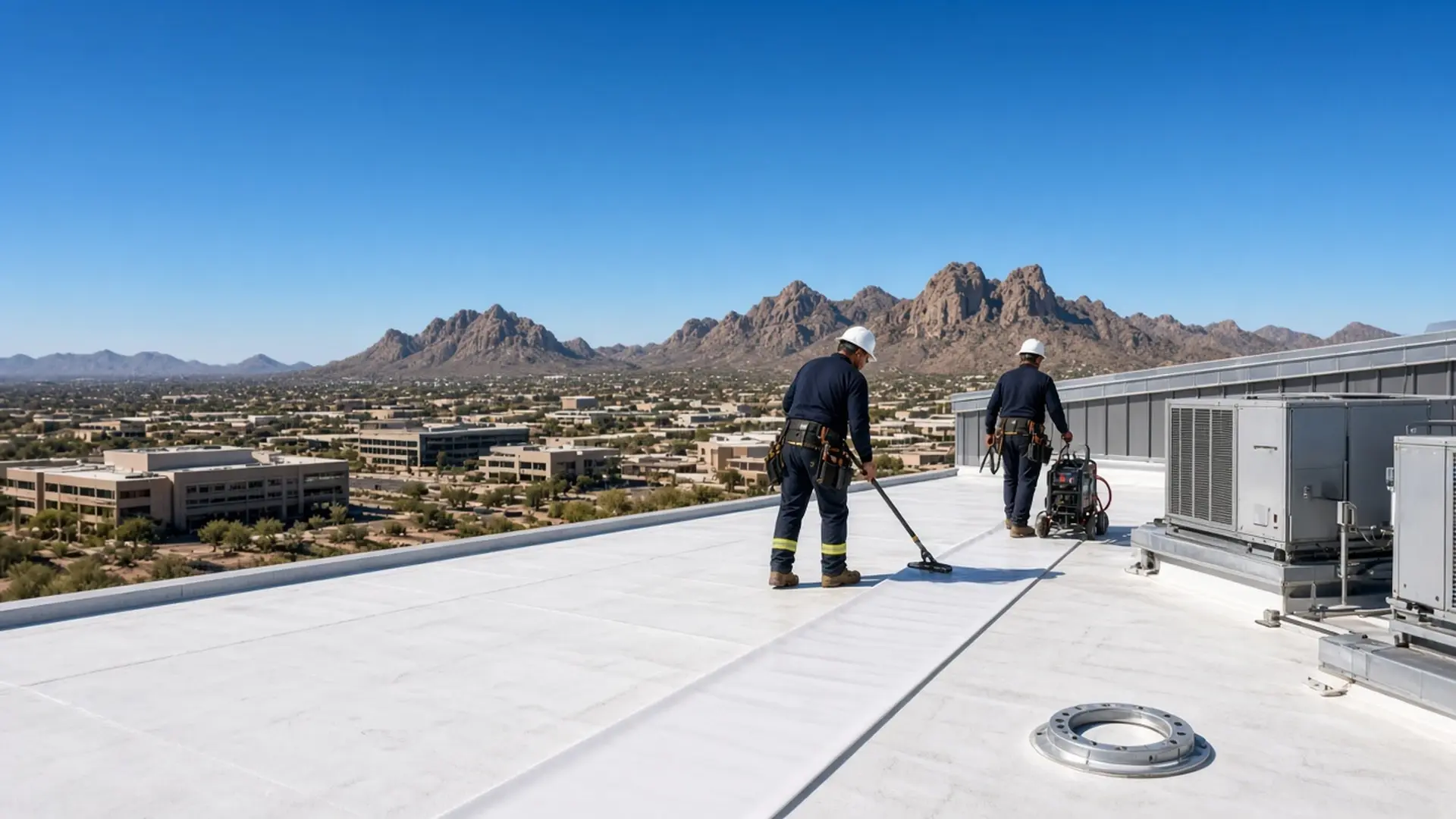
Commercial roofing crew rolling white TPO membrane on a Scottsdale roof

Weld windows, drain bowls, desert heat

Commercial Roofing in Scottsdale, AZ

Scottsdale Commercial Roofers specs, repairs, and replaces commercial roofs on East Valley offices, warehouses, and retail. Membranes, metal, foam, and details that live through 175F decks and July monsoon cells.

Text the crew

Get a quote, fast

Name, phone, and a short note about the job. That is the whole form.

Commercial roofs, East Valley buildings

Offices, warehouses, retail, and the decks that come with them. TPO, metal, foam, and whatever the building actually needs.

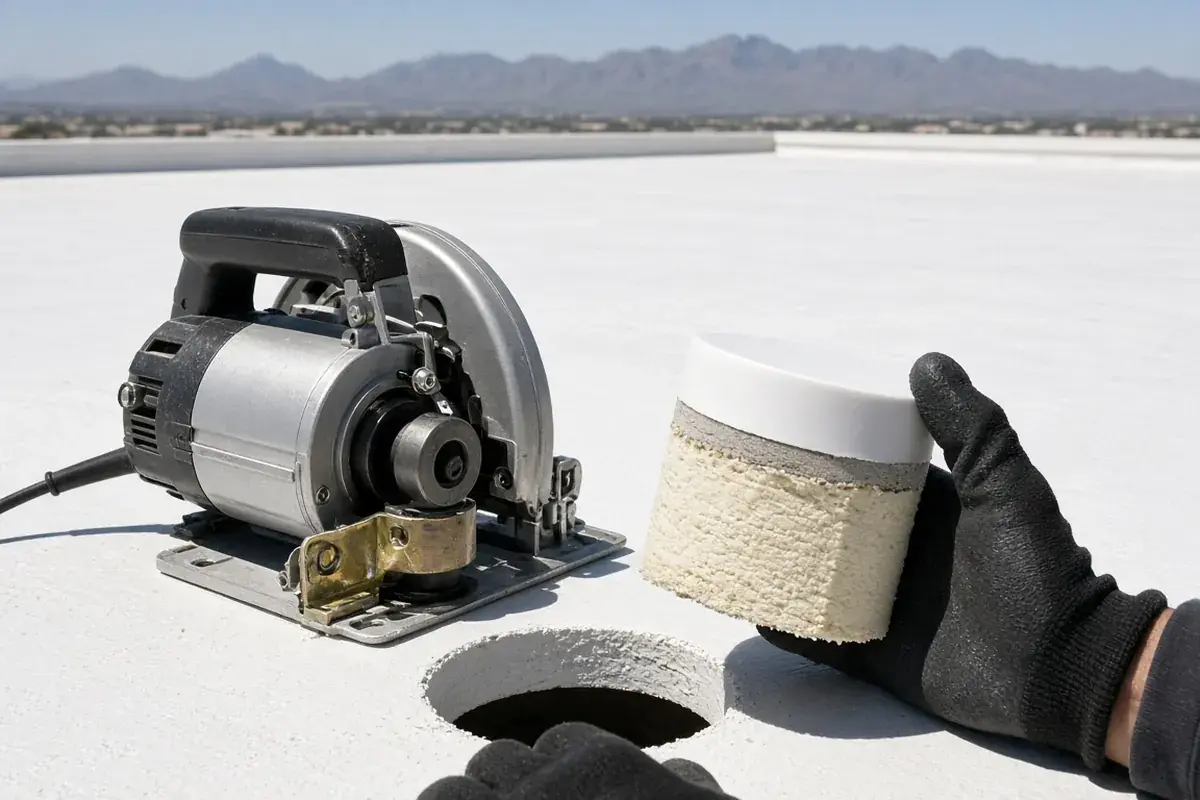
Cores before a recover

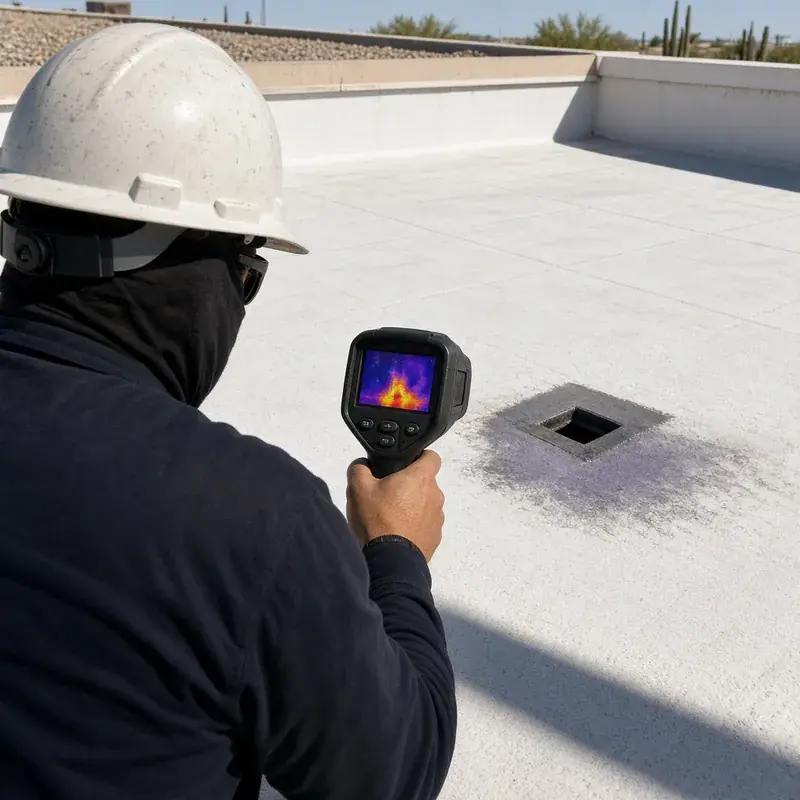
Wet polyiso stays wet under a new sheet. We cut, scan, and count existing roofs before anyone orders membrane.

Attachment from the deck up

Pullout values, IBC roof count, and FM 1-90 patterns when the building or the carrier asks. Not a guess from the lot.

Occupied-building habits

Night seals, interior protection at known stain points, and a crew that treats the parapet like the front door.

Where we work across the East Valley

Most of the work sits in Scottsdale, then fans across the East Valley. We run occupied office decks in north Scottsdale, retail parapets along Scottsdale Road, and warehouse fields toward the 101. Phoenix shows up as downtown mid-rises and Sky Harbor cargo roofs that cook harder at night than the suburbs. Mesa is Main Street masonry, Fiesta-era boxes, and the new Gateway tilt-ups. Tempe is campus-adjacent offices, Mill Avenue hospitality, and older low-slope over occupied retail. Chandler, Gilbert, and the foothill towns sit on the same monsoon path with different building stock. If you manage a roof in those cities, we walk it the same way: cores when needed, drainage first, membrane second.

See the full East Valley map

The work

Roof systems we specify and install

TPO, metal, spray foam, modified bitumen, plus the repair and replacement work that keeps those systems on the building. Pick the assembly that matches your deck, your drainage, and how many roofs are already up there.

  1. 01

    Commercial Flat Roofing

    Taper, drains, and membranes sized for monsoon bursts on flat commercial roofs.

    Open the spec
  2. 02

    TPO Roofing

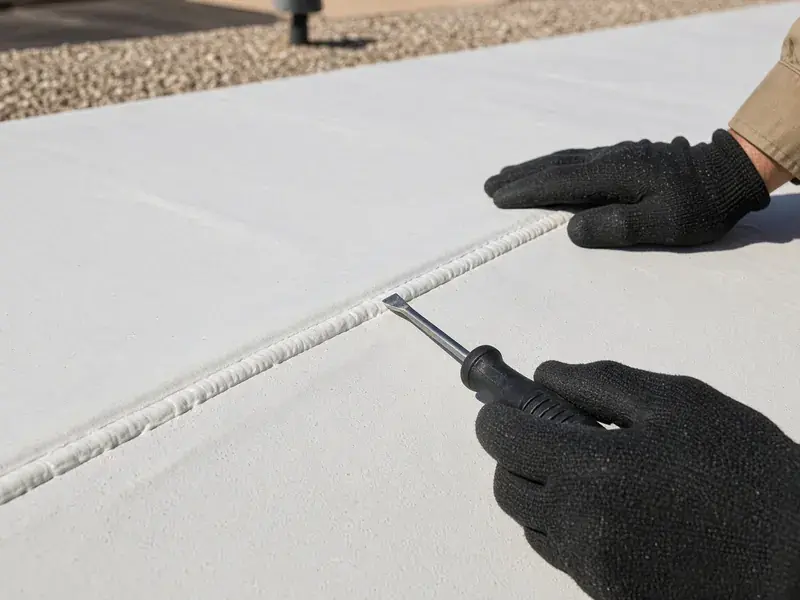
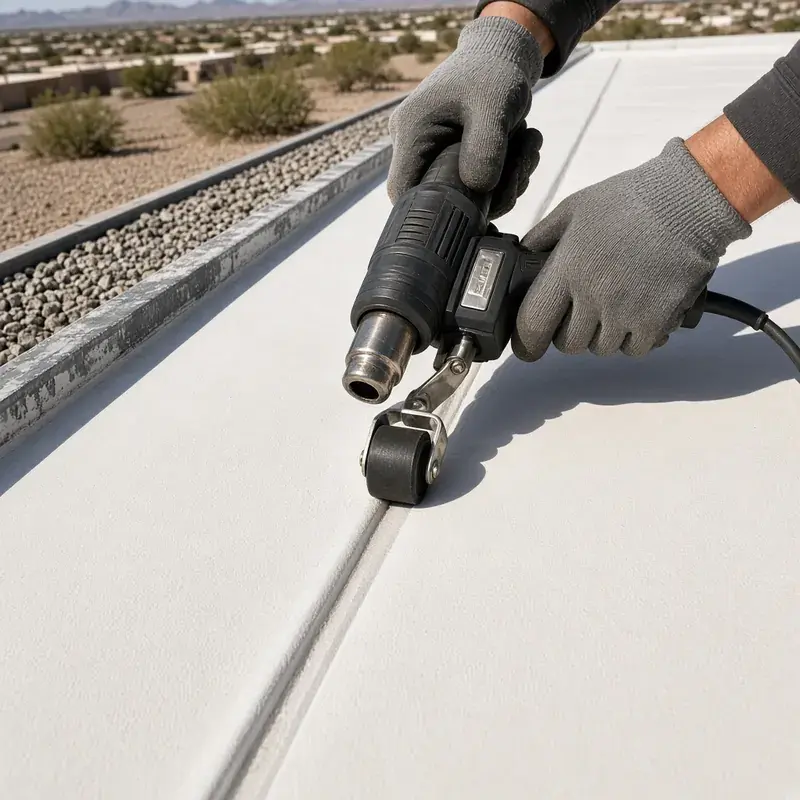
    Hot-air welded thermoplastic membranes with SRI-rated sheets for desert sun.

    Open the spec
  3. 03

    Commercial Metal Roofing

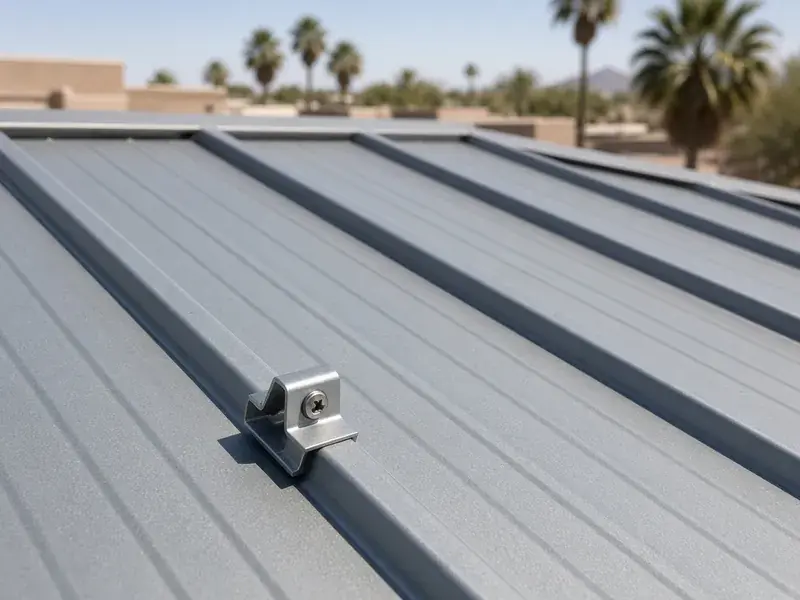
    Floating clips, PVDF finishes, and panel runs detailed for thermal cycling.

    Open the spec
  4. 04

    Spray Foam Roofing

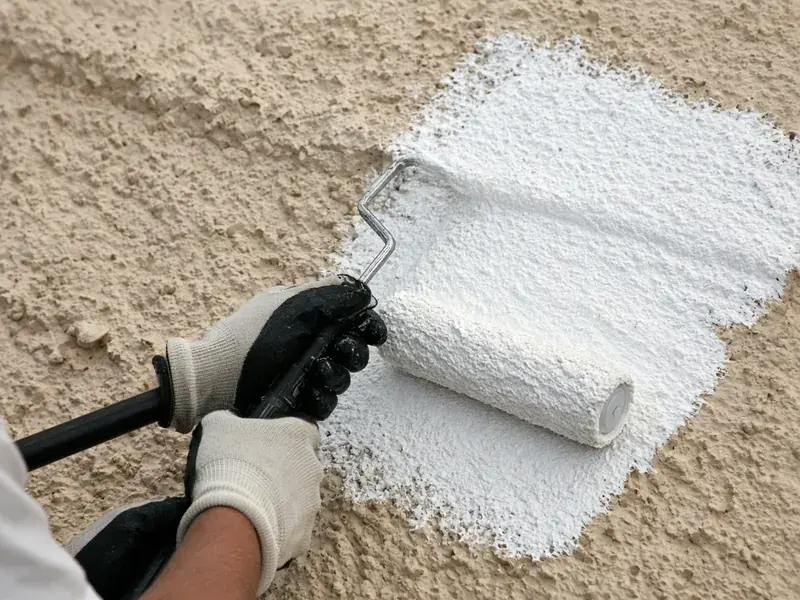
    2.5 to 3.0 pcf foam with measurable silicone or acrylic top coats.

    Open the spec
  5. 05

    Modified Bitumen Roofing

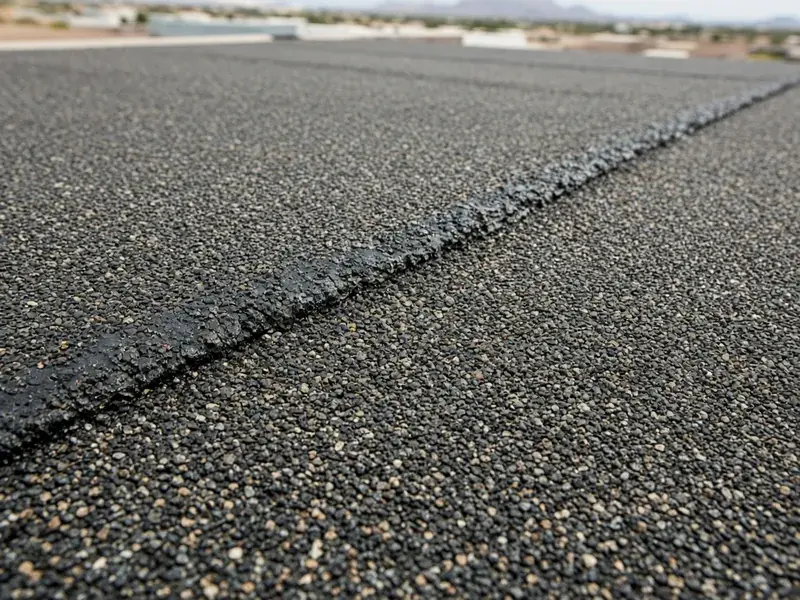
    Split-sheet and torch or cold-apply systems when a multi-ply still fits the building.

    Open the spec
  6. 06

    Commercial Roof Repair

    Flashing, drain, and peel-stop repairs for occupied commercial buildings.

    Open the spec
  7. 07

    Commercial Roof Replacement

    Full reroofs with cover board, FM-style attachment, and a documented drainage plan.

    Open the spec
  8. 08

    Office Building Roofing

    Low-slope systems over working floors, detailed around HVAC and tenant hours.

    Open the spec
  9. 09

    Warehouse Roofing

    Acre-size membranes, skylights, and fastener patterns that hold in monsoon outflow.

    Open the spec
  10. 10

    Emergency Roof Leak Repair

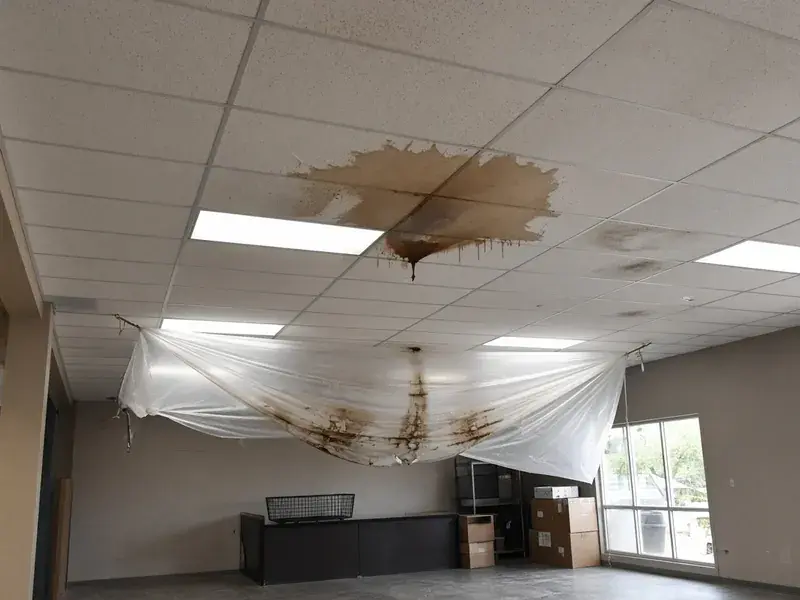
    Same-day leak response available for commercial interiors that cannot stay wet.

    Open the spec
Roof core sample being taken on a Scottsdale commercial deck

Why property managers pick this crew

  • Drainage first, product second

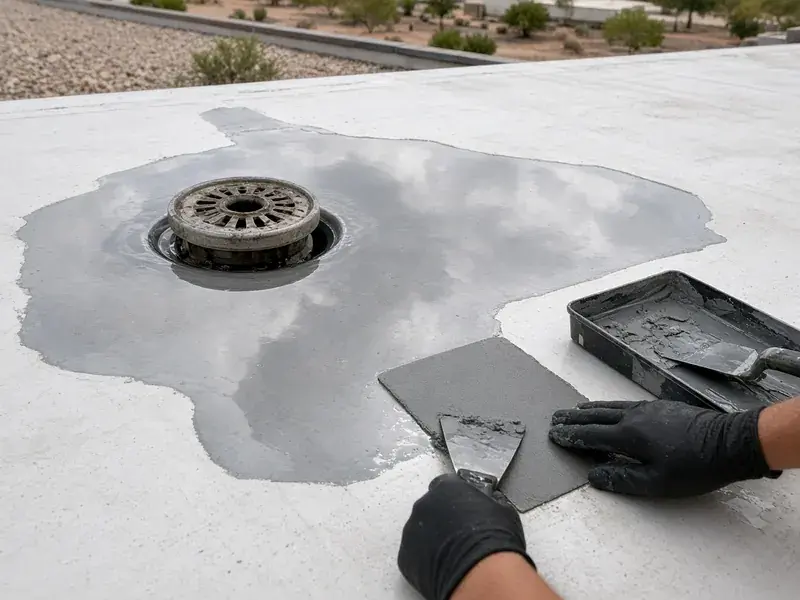
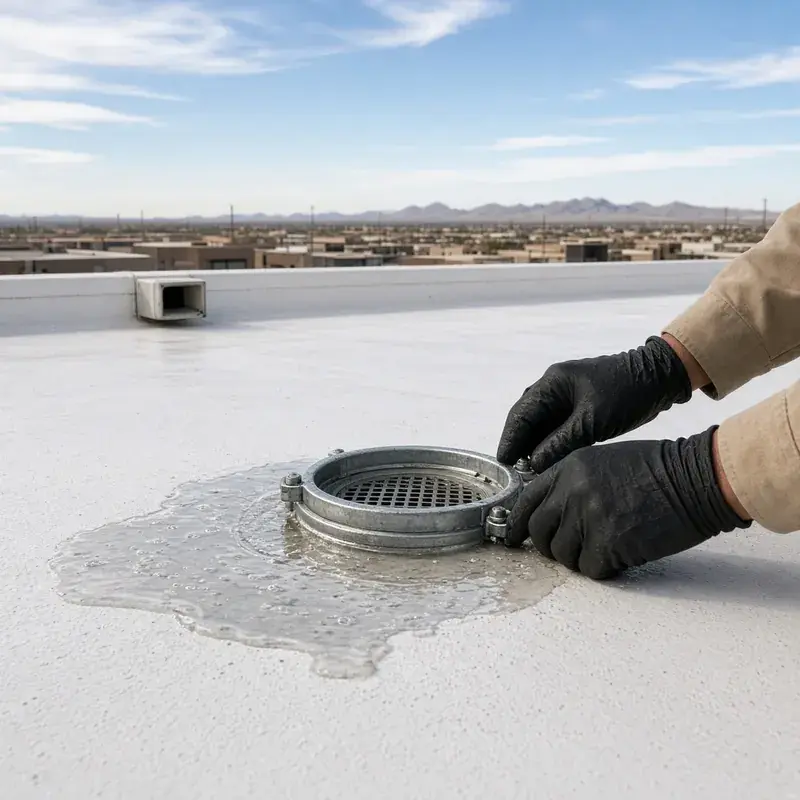
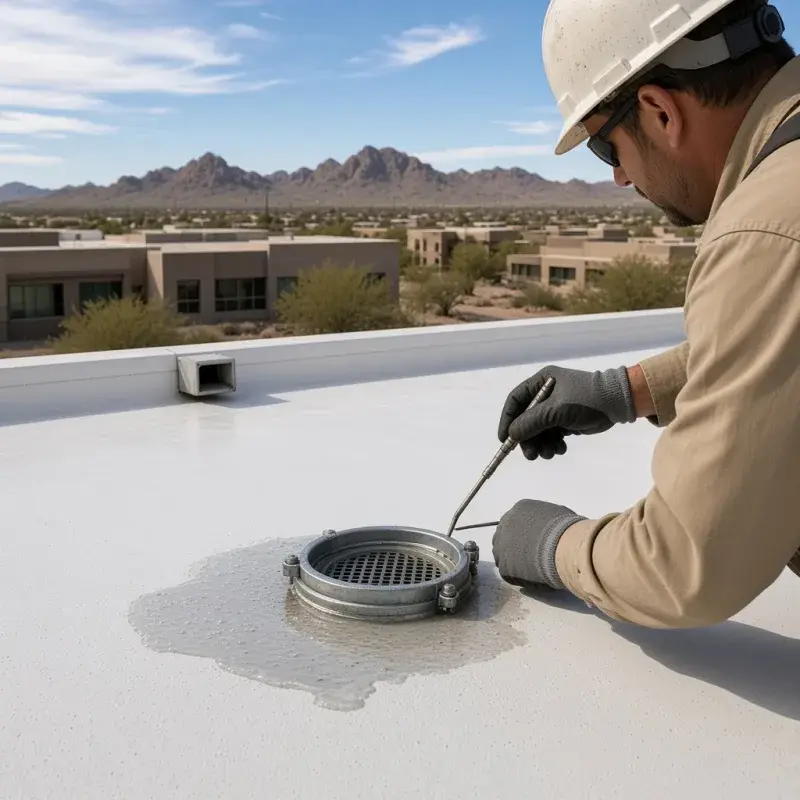
    A white sheet over a birdbath is still a birdbath. We spend the extra day on taper, crickets, and clamp-ring bowls because monsoon water is what cooks East Valley roofs, not the stamp on the roll.

  • Recover only when the cores allow it

    Two existing roofs, wet insulation, or a deck that will not hold a fastener means tear-off. We say that before the dumpster hits the lot, not after plan review sends the card back.

  • Details that move from 30F to 175F

    Winter nights here can sit near freezing. June surfaces hit 175F. Termination bars, edge metal, and membranes do not expand the same way. We detail for that cycle, not for a mild coastal spec sheet.

  • A file your board can act on

    You leave with photos of welds, drain bowls, and cores, plus a plain list of what is repair, recover, or replacement. No mystery stack of extras after the crew is already on the roof.

Questions we hear on the roof

What kinds of commercial roofs do you work on in Scottsdale?

TPO, EPDM, modified bitumen, spray foam recover, and standing-seam metal. Most East Valley calls are offices, warehouses, retail, restaurants, and HOA rec buildings.

Do you serve buildings outside Scottsdale city limits?

Yes. We cover the East Valley and adjoining cities including Phoenix, Mesa, Tempe, Chandler, Gilbert, Paradise Valley, Fountain Hills, and the smaller towns on the north and south edges. Start on the Where We Work page for the full list.

Is TPO the right membrane for desert heat?

It is the most common spec we see on new and replacement commercial decks here because a high-SRI white sheet reflects heat and welds into a monolithic field. The membrane still has to be welded inside its temperature window and detailed at every curb. TPO is a system, not a brand sticker.

Can you repair a leaking commercial roof instead of replacing it?

Often, if the field is still dry and the leak is a flashing, drain, or isolated seam. Cores and a moisture scan tell you whether you are in repair territory or whether wet insulation has already ended the roof's useful life.

How do monsoon storms change a commercial roof spec?

Short, hard rainfall tests drains and scuppers more than winter drizzle ever will. We size overflow paths, rebuild clamp-ring drains, and treat ponding past 48 hours as a slope problem. Wind uplift at corners matters too, especially on warehouse perimeters.

Will you work with my insurance carrier after a storm?

We can document damage and work with your carrier's adjuster when a monsoon or wind event opens a claim. The carrier and the building owner still decide coverage. We do not speak for the policy.

Do you need to shut down my office or warehouse for a reroof?

Usually no. Occupied buildings stay open. We phase tear-off, protect interiors under open deck, and schedule noisy work around your hours when the property manager asks. Receiving docks and tenant suites drive the daily opening plan.

What is a roof core and why do you cut one?

A core is a small plug through the membrane, cover board, and insulation down to the deck. It shows how many systems are stacked, whether the iso is wet, and whether a recover is even legal. Guessing that from the parking lot is how buildings get a third roof they cannot permit.

Do City of Scottsdale permits apply to commercial reroofs?

Most tear-offs and many recovers need a permit and plan review. Stacking a third roof is typically not allowed. We treat permit path as part of the spec, not paperwork you chase after the dumpsters arrive.

What is the difference between a recover and a replacement?

A recover puts a new membrane over a dry, eligible existing roof, often with cover board. A replacement tears the old system to the deck. Cores, wet insulation, and the number of existing roofs decide which path is honest.
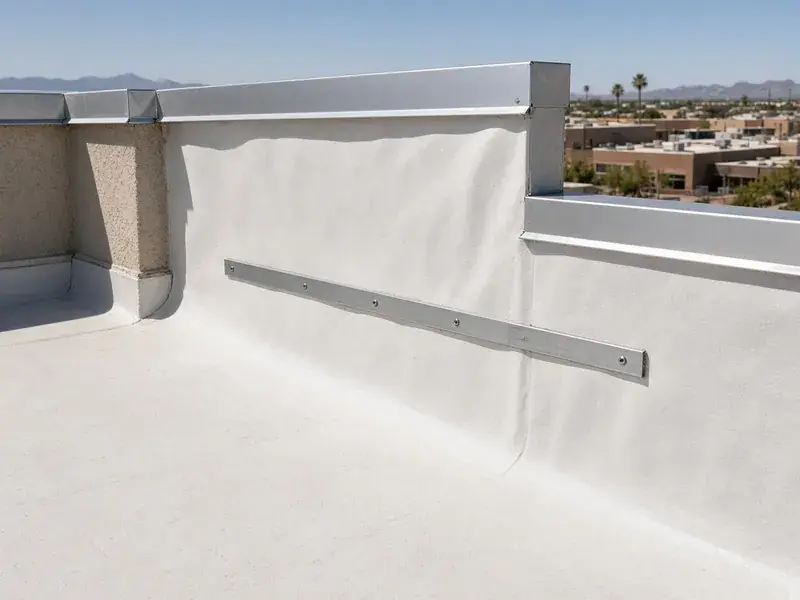
How a commercial reroof actually runs

Map the deck, the wet, and the water path

Step 1

Map the deck, the wet, and the water path

Cores, infrared or capacitance, and a hose or monsoon-memory walk. We note clamp-ring drains, overflow scuppers, cricket gaps, and every curb. The question is simple: where does water stall, and is the deck dry enough to recover.

Set recover versus tear-off and the attachment

Step 2

Set recover versus tear-off and the attachment

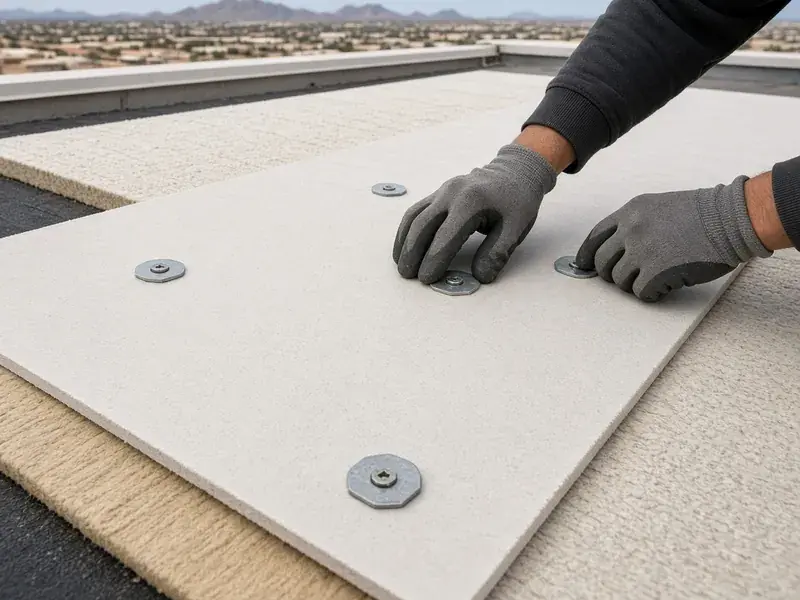
IBC roof-count rules decide if a third system is even legal. Fastener pullout on metal, concrete, or lightweight insulating concrete decides mechanical versus adhered. Perimeter and corner enhancement follows FM 1-90 when the project calls for it.

Build slope, cover board, and the sheet

Step 3

Build slope, cover board, and the sheet

Tapered polyiso goes down to a drainage plan, usually 1/4 in 12 where the structure allows, with crickets behind wide RTU curbs. Cover board next. Then TPO, SBS, metal, or SPF to the spec, with terminations that can take desert thermal cycling.

Probe, water-test, and close the file

Step 4

Probe, water-test, and close the file

Field laps and T-joints get probed where the system allows. Drains and scuppers get a water test. You leave with as-builts of welds, fasteners, and bowls, plus a clear split between what the crew changed and what the deck still is.

Job types on the East Valley skyline

Occupied office campus reroof

North Scottsdale and the 101 office parks are long TPO or mod-bit fields over people still on the phones. The work is night seals, interior protection at historic stain points, and a weld campaign that does not shut a floor. RTU rows, old pitch pockets, and shared drain trees from the 80s are the usual map. We stage so the lot and the lobby stay usable.

Tilt-up warehouse drainage rebuild

Gateway, the 202 belt, and Sky Harbor cargo roofs are acre-size watersheds. One clogged clamp-ring drain puts an inch of water over a seam in a 20-minute cell. The job is cricket layout, overflow scupper height, dock-wall flashings, and a fastening pattern that can take long-wall movement. Tear-off windows follow dock hours, not a brochure.

Strip-center parapet and grease cluster

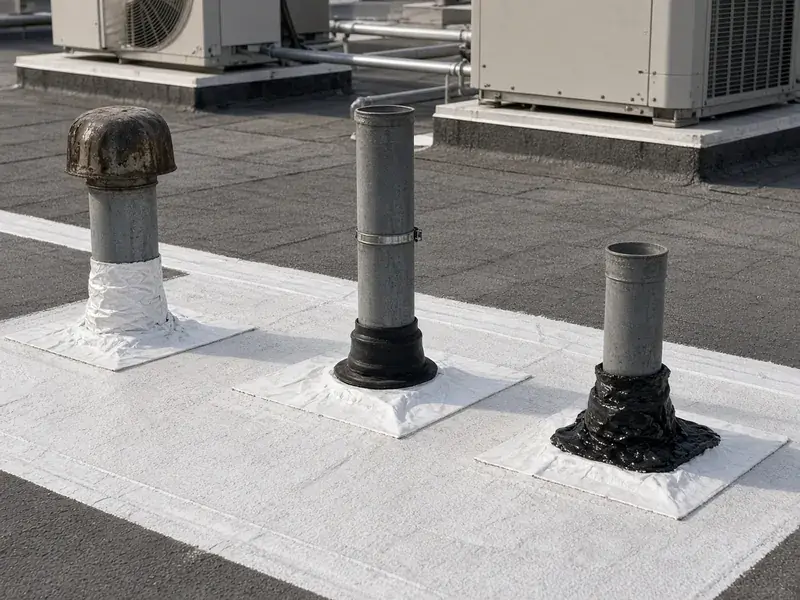
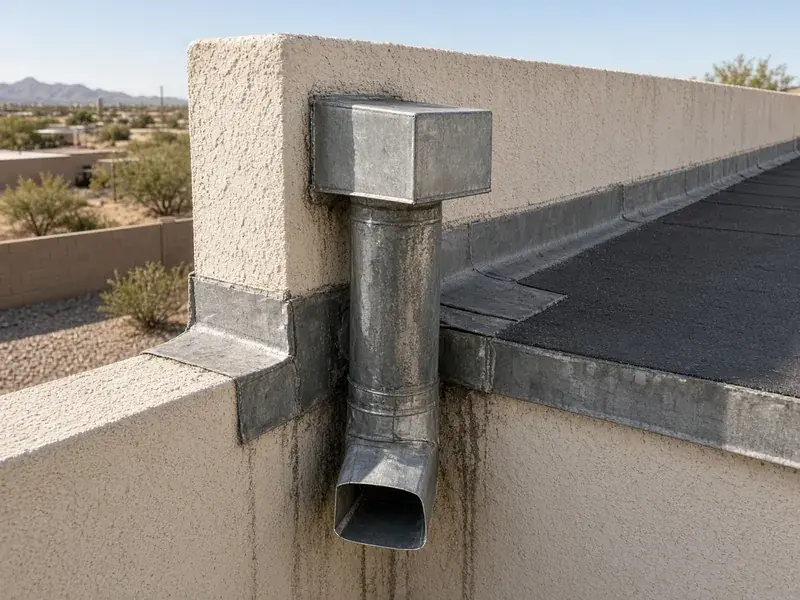
Scottsdale Road, Main Street Mesa, and Gilbert pads pack exhaust fans, grease ducts, and short masonry parapets onto small decks. Grease breaks coatings. Open copings walk water into the wall. We start at the exhaust cluster and the wet side of the parapet, then work out to the drains. A dining-room stain almost always traces there, not to the pretty middle of the bay.

Medical and outpatient staging

Clinics and outpatient boxes along Shea, Price, and Gilbert Road add RTUs after the original slope plan. Infection-control and odor limits decide how we bag tear-off and when we open a field. Crickets get rebuilt when the unit count changes. Walk pads go in so the next service tech does not punch a soft sheet at 170F.

Resort and hospitality casita decks

Paradise Valley and north Scottsdale hospitality hide low-slope membranes behind tile edges, screen walls, and tall parapets. The assembly is a lot of small roofs, planters, and walkways instead of one field. Edge metal takes mountain gusts. Design review cares what the roof looks like from a trail. We detail the hidden membrane and the visible cap as one system.

BUR recover to white TPO

Encanto-era Phoenix and older East Valley boxes still carry gravel built-up under later coats. If cores are dry and you only have one roof, cover board plus fleece-back TPO can be an honest recover. If the felts are brittle or the iso is wet, another sheet just traps the problem. Test cuts decide it, not the color of the last coating.

Standing-seam and screw-down metal retrofit

Older East Valley industrial still has through-fastened panels that have walked their washers in the heat. A standing-seam retrofit or a lap-and-closure campaign is a different job than a membrane recover. We check clip movement, condensation on the underside, and how the eave dumps into a gutter that was sized for a milder storm. Desert UV and thermal cycling are what loosen those fasteners.

Peel-stop and temporary dry-in after a cell

A monsoon can lift a loose edge or open a cold weld overnight. Peel-stop is a weighted, temporary hold so the field does not keep unzipping. Tarps and night seals buy time to get material and a weld window. They are not a new roof, and they are not a promise the suite stays dry. The permanent work is reattachment, a probed seam, or a tear-off once the deck is readable.

Commercial roof membranes, codes, and desert methods

A Scottsdale commercial roof is a heat machine that also has to dump a monsoon cell. White TPO to ASTM D6878 is the field sheet we specify most on East Valley offices and tilt-ups because it welds, it carries a high solar reflectance index, and HVAC techs can walk it without tearing up a gravel flood coat. Thickness is 60 mil or 80 mil. Fleece-back belongs on a recover over a dry, ugly substrate, not as a way to hide wet polyiso. EPDM still shows up on older decks. Tape seams and splicing cement hate 175F surface temps, so those laps become a maintenance item early. Closed-cell SPF can lock down an irregular field if cores are dry and the coating is a high-SRI silicone or acrylic you actually recoat. SBS modified bitumen earns its keep on small sections, high-abuse parapets, and torch or cold-process details where a thermoplastic sheet is awkward. Under the sheet, polyiso is sold on LTTR, long-term thermal resistance, not the first-day R-value on a truck sticker. Cover board matters as much as the foam here. Gypsum or high-density iso spreads foot traffic and takes the fastener head so the membrane does not print every flute at 170F. Tapered polyiso is how you build 1/4 in 12 when the steel was set dead level. Crickets behind RTU curbs are how a 20-minute cell reaches the drain instead of sitting in a birdbath. IBC reroof rules decide recover versus tear-off once you already have two roofs, and City of Scottsdale plan review will ask. NRCA details and the 48-hour ponding rule are how we argue slope. FM 1-90 is a wind-uplift classification, not a brand of membrane. When the carrier or the owner wants it, perimeter and corner fastening follow the tested pattern after pullout on the actual deck. SRI is the cool-roof number. A listed white TPO starts high. Desert dust and ponding dirt knock it down, so drainage matters as much as the lab value.

Dusk on a Scottsdale commercial roof deck

Ready to sort out the roof?

Call Scottsdale Commercial Roofers with the address, the current membrane if you know it, and what you want done. We will walk the roof, core it if we need to, and lay out repair, recover, replacement, or a new system in a way your board can act on.

Call the roof line · (480) 300-7287