Mesa still reads as a Mormon-settlement grid. Wide streets, long commercial blocks, and a Main Street strip that predates the freeway. The Fiesta District is a mash of older mall-era boxes and newer pads. Out east, Mesa Gateway has turned the old air-base edge into logistics and industrial. West and central 852xx stock is a different animal from those new tilt-ups. Property managers call Scottsdale Commercial Roofers when a Main Street parapet opens, when a Gateway warehouse ponds, or when a Fiesta-area roof has two eras of membrane on one deck. We work retail, offices, industrial, and restaurant roofs across Mesa. The grid is big. The roof problems are not all the same. Citrus land on the east edge is still turning into pads, so a brand-new Gateway TPO can sit a mile from a 1970s Main Street parapet. The 852xx zips cover both, and they do not fail the same way.
Why Mesa buildings call
Main Street strip buildings from the grid era
Older Main Street commercial was built on wide lots with masonry parapets and low-slope decks behind a storefront. Flashings at those parapets, not the field, are what leak. A lot of these roofs have been coated without anyone resetting the coping.
Mesa Gateway logistics taking monsoon dumps
The Gateway industrial parks are new enough that people assume the roofs are fine. They are large, and a single clogged drain on a tilt-up can put water over a seam in one storm. Dock-high walls and long scupper runs need a real drainage plan, not a hope.
Fiesta District mixed-era decks
The Fiesta District has mall-era BUR sitting next to newer TPO on outparcels. Same parking field, two different assemblies, two different failure modes. Property managers who treat the whole district as one roof type miss the older boxes.
The commercial stock in Mesa
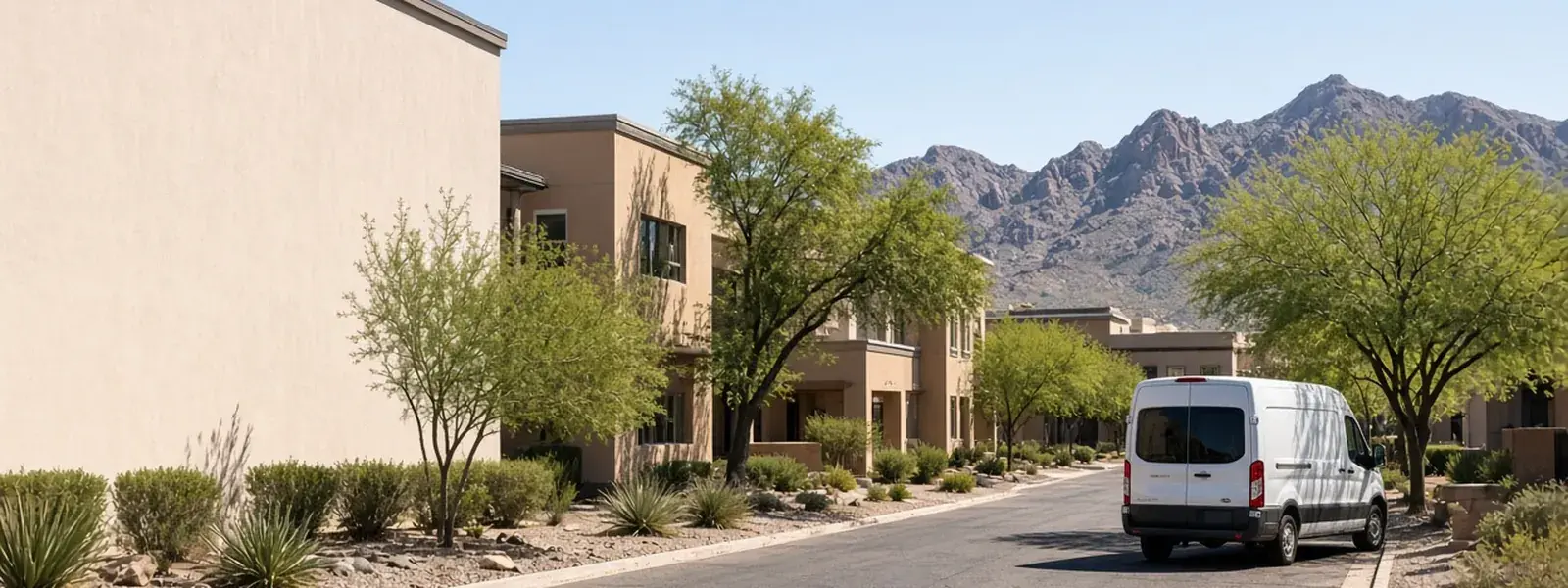
Mesa's commercial map follows the old settlement grid and then jumps to the airport. Downtown and Main Street are one- and two-story masonry, older strip centers, and civic buildings with built-up or foam roofs. The Fiesta District still has large-footprint retail from the mall years, plus restaurant pads and entertainment boxes with lots of rooftop units. East Mesa and the Gateway corridor are newer tilt-wall warehouses, flex industrial, and medical along the Superstition Freeway. Citrus and farm parcels on the east edge are still turning into commercial pads, so you will see brand-new TPO next to a 1970s metal building that used to serve the grove. The 852xx zips cover all of that. One city, three building generations.
How weather hits this map
Mesa sits more open than downtown Phoenix, so nights cool a little more. The tradeoff is wind fetch across those wide streets and the big Gateway fields. Monsoon cells coming off the Superstitions hit east Mesa first and dump on warehouses that drain to a few interior points. Dust from remaining ag land and from construction loads those drains. West Mesa's older gravel roofs bake on the same summer schedule as the rest of the East Valley. Heat is the baseline. Wind and drain clogging are the Mesa-specific extras, especially from the Fiesta District east to Gateway. A storm that looks light downtown can still dump on those wide Gateway fields.
The Mormon-settlement grid is not just a history note. Those wide blocks produced long, shallow commercial buildings with parapets on all four sides and almost no slope. Water has to travel. If a Main Street scupper is undersized or a cricket was never built behind a rooftop unit, the field holds water after every storm. We look at slope and drainage on these blocks before we talk membrane. A new sheet on a ponding deck is a short-term story. Main Street buildings have been collecting water in the same corners since the grid was laid out.
Mesa Gateway roofs are a logistics problem as much as a roofing problem. Buildings run receiving hours, trailer staging, and sometimes air-cargo adjacency. Tear-off dust and crane picks have to stay out of the yard. These decks are usually TPO or metal over insulation, and the weak points are welds at corners, expansion joints on long walls, and the dock-edge detail where the wall meets the roof. We walk those three first. Field membrane that still looks white can hide an open joint at a 400-foot wall.
Fiesta District roofs confuse people because the parking lot looks uniform. It is not. Mall-era boxes often still have BUR or a recover over BUR. Outparcels from later years are TPO or coated foam. A district-wide 'coat everything' plan fails both. We split the site by assembly, test-cut the older boxes, and treat the new pads as a maintenance set. That is how you stop paying for the same leak in two different languages. The mall-era boxes and the outparcels need different scopes, even when they share a parking lot.
East Mesa industrial that replaced groves has a dust problem the west side does not. Fine soil and leftover ag dirt load gutters and interior drains by June. We put drain baskets and a mid-summer clean on those roofs the same way we would on a construction-adjacent site. Skipping that is how a two-year-old TPO ends up with a pond and a seam peel in August. East Mesa dirt is leftover grove soil, and it packs a strainer faster than west Mesa parking dust. A mid-summer drain walk belongs on those east-side industrial roofs.
Roof systems we run in Mesa
- Commercial Flat Roofing
- TPO Roofing
- Commercial Metal Roofing
- Spray Foam Roofing
- Modified Bitumen Roofing
- Commercial Roof Repair
- Commercial Roof Replacement
- Office Building Roofing
- Warehouse Roofing
- Emergency Roof Leak Repair
Back to the full East Valley map.
If you run a Main Street block, a Fiesta-area center, or a Gateway warehouse, Scottsdale Commercial Roofers will read the assembly you actually have, not the one on a generic Mesa checklist. Call us and we will walk the roof with drainage and era in mind, not a one-size Mesa checklist.