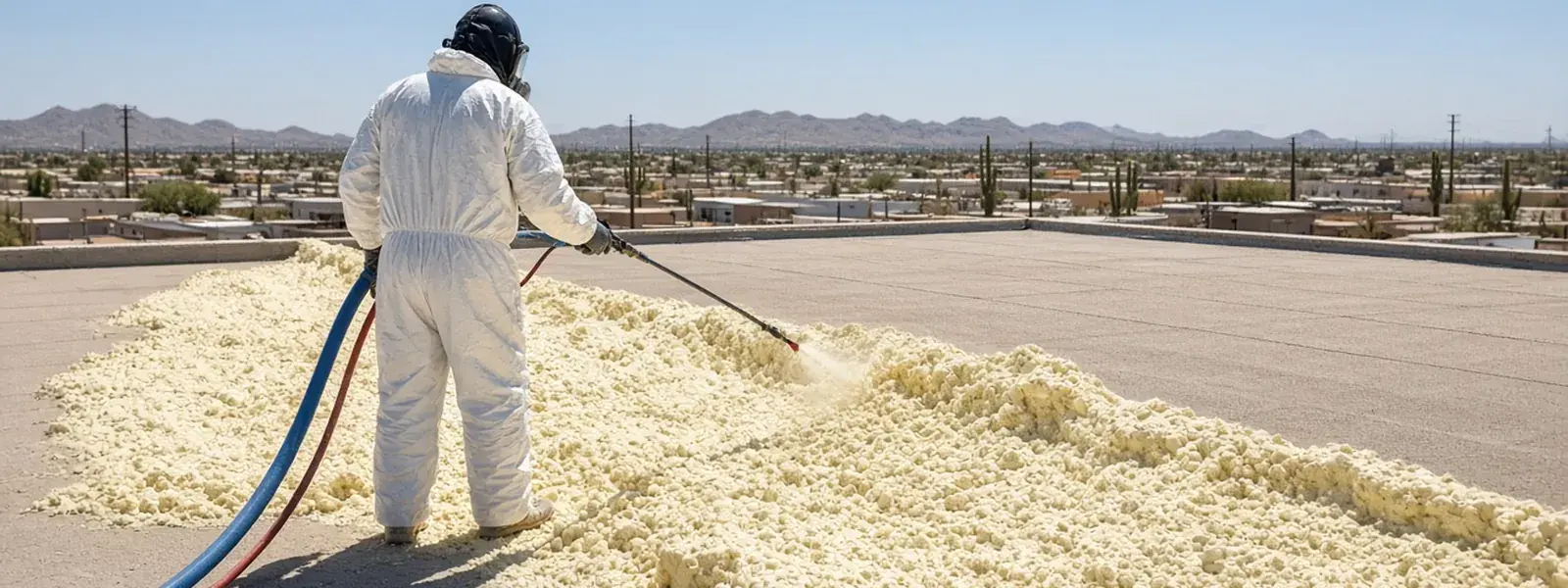
Spray polyurethane foam is a recover tool with chemistry, not a magic white blanket. Closed-cell SPF at 2.5 to 3.0 pcf can lock down an irregular East Valley field, add R-value, and take a silicone top coat that actually handles monsoon ponding. It fails when someone foams over wet iso, sprays 1-inch lifts in a 20-mph afternoon, or uses an acrylic that re-emulsifies in a birdbath. Property managers call when the old built-up is alligatoring, when a coating is chalking, or when they want insulation without a full tear-off. Scottsdale Commercial Roofers specifies and installs SPF roofing only on dry, prepared substrates, with lift control and a coating thickness you can measure. If the cores are wet, we will tell you to tear off before anyone hooks up a gun.
What this job includes
- Closed-cell SPF at 2.5 to 3.0 pcf, not a soft 2.0 pcf “cheap foam” pass
- Lift schedule in 1 to 1.5 inch passes with substrate temperature and humidity logged
- Core samples for density, adhesion, and existing moisture before we commit to recover
- High-solids silicone coating at specified dry mils, with extra at drains and scuppers
- Acrylic coating only where the roof truly drains and a recoat plan is acceptable
- Granule broadcast where walk traffic and UV need a sacrificial layer
- Cut-out and replacement of soft, wet, or delaminated existing foam before overlay
- Curb, scupper, and clamp-ring drain detailing so foam does not choke the water path
- Wind-lift inspection of existing foam skins and peel tests on suspect areas
- Recoat window documented so you know when the next mils are due, not a guess
When this is the right call
The old BUR is dry but too cut-up to membrane cheaply
A dry, ugly built-up with a thousand patches is a classic SPF recover. Foam fills the irregularities and gives you a monolithic field. If the BUR is wet, foam seals the moisture in. Cores decide that in an afternoon.
Your existing foam is cracking and the coating is gone
SPF without a UV coat becomes toast. In Scottsdale that can happen in a single brutal summer if someone skipped mils. We scarify, cut out soft foam, and rebuild thickness before we recast the coating.
You need R-value and cannot raise HVAC curbs a lot
Closed-cell SPF gives roughly R-6.5 per inch. An inch or two can help a hot warehouse deck. If you need serious taper, we still use foam, but we shape it, we do not pretend a uniform pass creates drainage.
Ponding is killing your acrylic recoat cycle
Acrylics are moisture-sensitive. Monsoon birdbaths turn them into a soft film. If the roof ponds, we either add foam taper and fix drains, or we move that field to silicone. Recoating the same acrylic over the same pond is a habit, not a plan.
A prior foam job is delaminating in the wind
Poor adhesion, a dusty pass, or foam over gravel that was never spudded will peel in a monsoon outflow. That is a tear-off of the failed skin, not another coating on a loose blanket.
How the work actually runs
Move 1
Core, moisture-scan, and adhesion test
We map wet insulation, check existing foam density, and pull adhesion. Gravel BUR gets a real spud, not a hopeful overspray. If moisture is in the system, those areas come out. SPF is a recover for dry roofs.
Move 2
Set the spray window
Foam wants a clean, dry, warm substrate and low wind. A Scottsdale afternoon can be too hot at the surface and too gusty on the parapet. We spray in the window the foam manufacturer actually publishes, with substrate temp and humidity on the ticket.
Move 3
Apply foam in controlled lifts
Passes stay in the 1 to 1.5 inch range so the exotherm stays sane and the lift bonds. We build extra at perimeters if the wind design wants it and we shape crickets at curbs. Soft foam gets cut out the same day, not coated over.
Move 4
Coat to dry mils you can punch
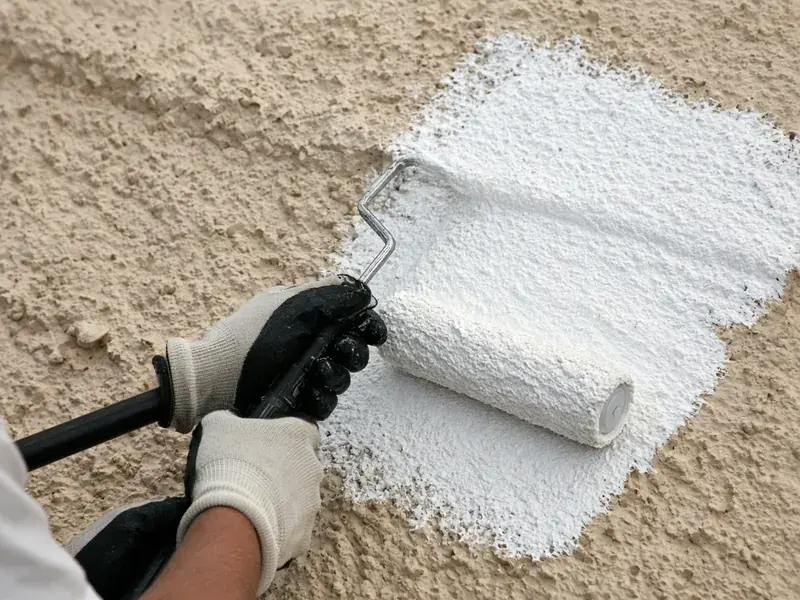
Silicone or acrylic goes on to the specified dry-film thickness, with extra at drains, scuppers, and walk paths. We punch mils. A “two-coat look” that measures 8 dry mils is not a roof in this UV.
Move 5
Detail drains and write the recoat window
Foam is trimmed out of clamp rings and scupper throats so water can leave. Granules go where feet go. You get cores, mil punches, and a recoat interval based on the coating chemistry, not a slogan.
Why this crew for spray foam roofing
Density and lifts, not “foam is foam”
Roofing SPF is 2.5 to 3.0 pcf closed-cell. Softer foam walks, creeps, and tears at curbs. We spray roof foam, not wall foam that happened to be on the truck.
Silicone where monsoon water sits
We will not put a bargain acrylic on a ponding Scottsdale field and hope. Silicone handles standing water. Acrylic belongs on slopes that actually drain.
Moisture honesty before the gun turns on
Foam over wet iso is a blister factory in this heat. Cores and cuts happen first. That is how you avoid a white roof that smells like a wet attic in August.
Measurable coating thickness
UV here will destroy bare foam. We specify dry mils and we punch them. Recoat windows are written so you can budget, not so we can disappear.
A professional crew that masks the building
Overspray on cars, stucco, and HVAC coils is how foam jobs get famous for the wrong reason. Licensed and insured staging, wind limits, and masking are part of the work.
Closed-cell roofing foam at 2.5 to 3.0 pcf is a different product from the 0.5 pcf open-cell you see in attics. It is the skin of the roof. Density gives compressive strength so an HVAC tech does not crush a path to the unit. It also resists the wind peel that a soft pass invites at the parapet. If a bid is cheap because the foam is light, you are buying a cushion, not a roof. We cut cores after the spray so you can see density in your file, not just on a product data sheet.
The spray window in Scottsdale is unforgiving. Surface temps can exceed what the foam wants by late morning in June. Humidity is usually low, which helps, but a monsoon gust at 2 p.m. will put foam on the neighbor’s windshield. We schedule lifts around that. A good foam day here often starts early and stops when the wind or the surface temp leaves the manufacturer’s chart. Stopping the gun is cheaper than a complaint from the office next door and a skin that never bonded.
Silicone versus acrylic is the coating argument that decides whether an SPF roof survives ponding. Acrylics are water-borne, easier to recoat, and fine on a roof that sheds in hours. They soften and wash in a birdbath. High-solids silicone is the East Valley default on low-slope foam because monsoon water sits. Silicone wants a clean, dry, compatible base and a thickness you can measure. It is not a wipe-on paint. We punch dry mils at drains and in the field so the coating thickness is a number, not a look.
Existing SPF that has been neglected is still often saveable. We scarify the oxidized skin, cut out the orange crunchy foam, and rebuild. What we will not do is coat over delamination. If the original pass never stuck to gravel or dusty BUR, wind will take the new coat with the old skin. Adhesion tests are faster than arguing about it on a leak call. A loose blanket that looks white from the lot is still a loose blanket when the next outflow arrives.
Foam changes drainage if you let it. A sloppy pass can raise a drain bowl, shrink a scupper throat, or build a dam at a curb. We treat SPF as a sculpted recover. Extra foam becomes taper. Drains stay the low point. That is the difference between an insulation upgrade and a new ponding problem you created on purpose. We walk the watershed after the foam and before the coating so those dams get shaved off, not painted over later.
Where this work goes
We run spray foam roofing across Scottsdale and the East Valley. For the full city list, open Where We Work. Priority walks after Scottsdale are Phoenix, Mesa, Tempe.
If you are looking at spray-foam roofing for a dry, tired Scottsdale field, call Scottsdale Commercial Roofers. We will core it, talk density and coating chemistry in plain numbers, and tell you whether SPF is the recover or whether that moisture in the iso means tear-off instead. Bring last year’s coating invoice if you have one. Recoat history tells us as much as the cores.