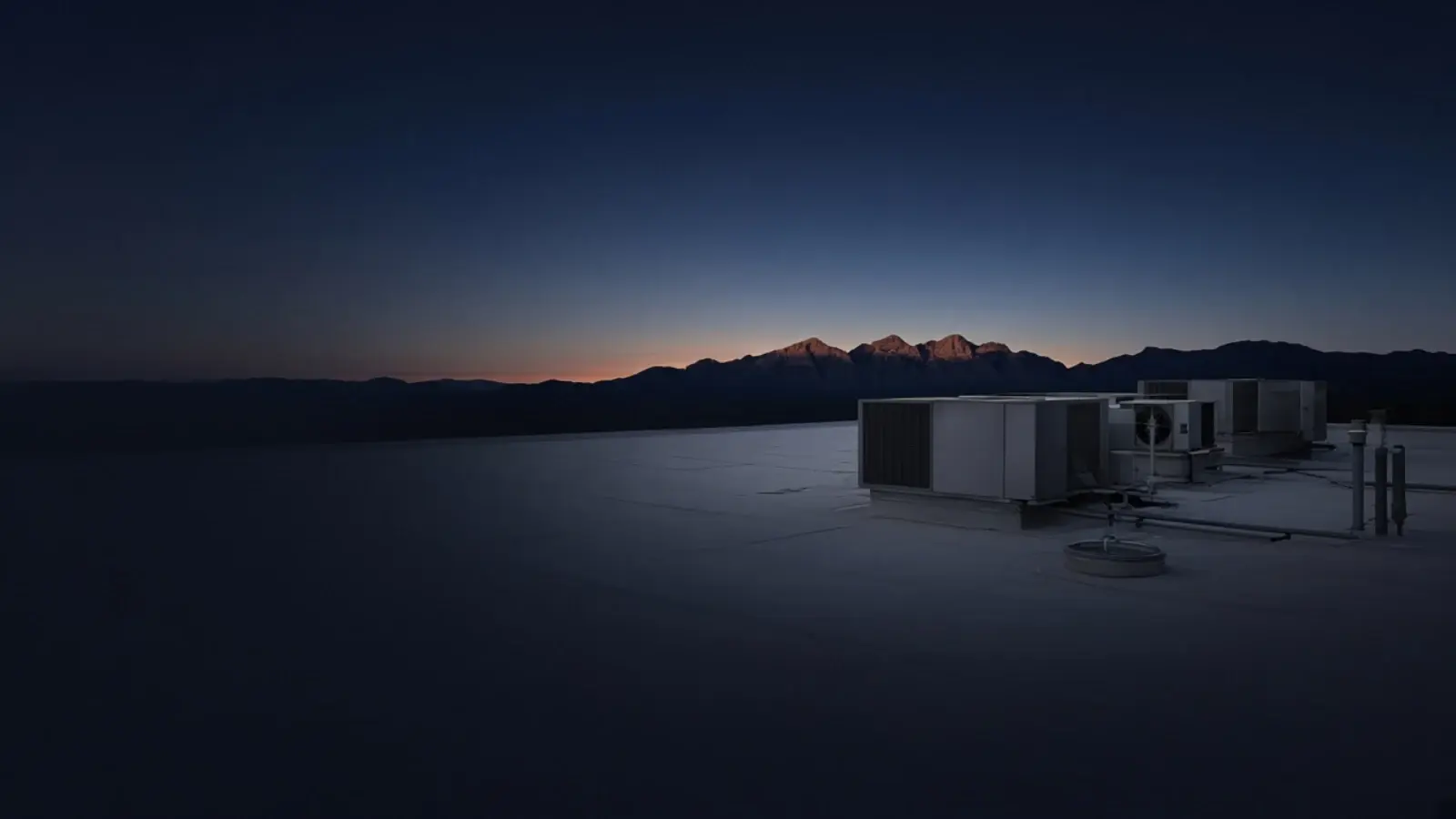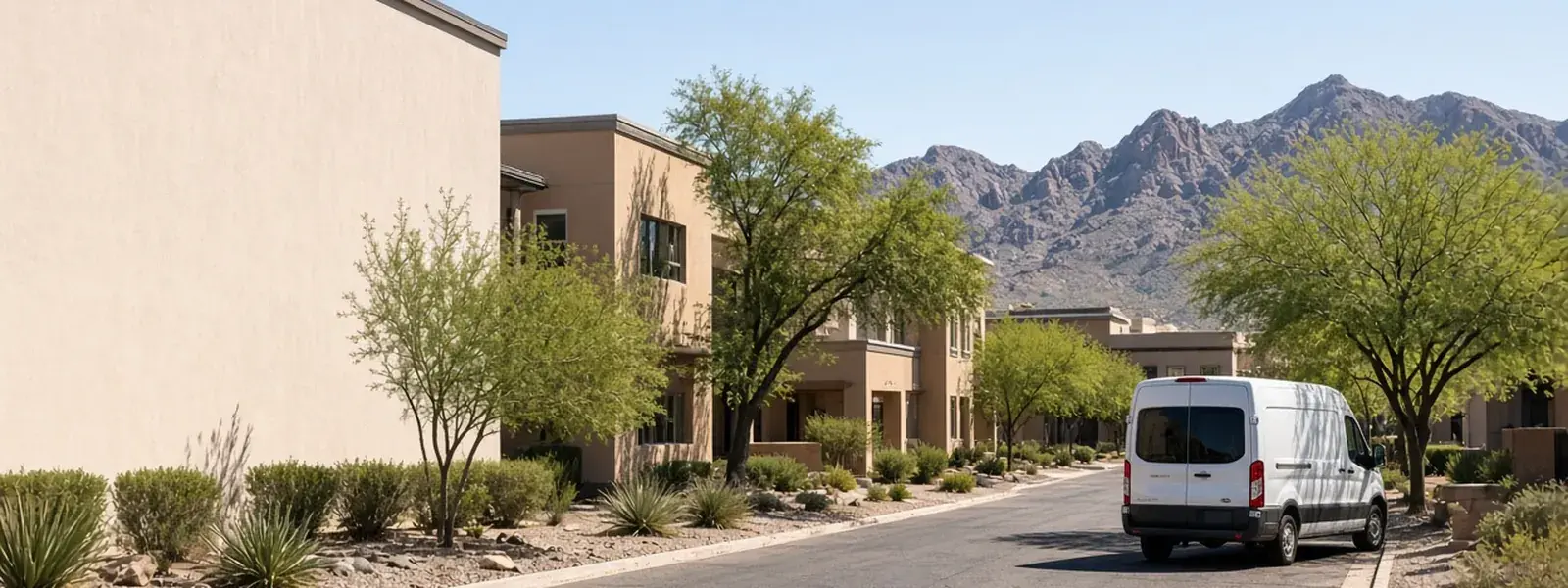
Fountain Hills commercial roofs sit higher and windier than the Valley floor. Fountain Park is the center. Shea Boulevard is the commercial spine: grocery, medical, restaurants, and small offices from the 1980s and 1990s. Golf-community retail and club buildings fill the rest. A lot of that stock is original built-up roofing hitting the end of its first long service cycle. Property managers call Scottsdale Commercial Roofers when a Shea strip BUR blisters, when wind off the McDowells lifts edge metal, or when a golf-course restaurant leaks at a parapet that was never reset. Elevation, age, and a short commercial inventory. That is Fountain Hills. The fountain itself is the landmark people know. The roofs that leak are the grocery and medical boxes along Shea, plus club kitchens that face the courses. Most of that stock went up in one boom and is aging out together in the same decade.
Why Fountain Hills buildings call
Shea Boulevard 1980s and 1990s built-up
Most of the Shea commercial spine went up in one boom. Gravel BUR and early modified bitumen are now 30-plus years in. Blisters, dry felts, and tired flashings are the call, not a five-year-old TPO weld.
Wind at a higher elevation
Fountain Hills sits up on the McDowell edge. Gusts are stronger and more frequent than in Chandler. Edge metal, coping, and sign-ridden parapets on Shea take that load. Wind damage here is a pattern, not a one-off.
Golf-community retail and club decks
Restaurant and club roofs along the courses have kitchen exhaust, view-side parapets, and irrigation overspray. Those three together rot coatings and stain walls. The roof has to handle grease and overspray, not just sun.
The commercial stock in Fountain Hills
Fountain Hills does not have a warehouse belt. Commercial is a Shea Boulevard strip, the pads around Fountain Park, and club or restaurant buildings tucked into golf communities. Most of it is one-story masonry and stucco from the 1980s and 1990s: grocery, medical, banks, and small offices on gravel BUR or modified bitumen. A few later pads added TPO. Clubhouses and view restaurants often have mixed roofs, a low-slope kitchen wing behind a tile-looking face. Civic buildings near the park follow the same era. You will not find Sky Harbor cargo or Price Road mid-rises. You will find a tight set of aging low-slope roofs that were all built in the same two decades and are aging out together.
How weather hits this map
Elevation is the climate difference. Fountain Hills sits hundreds of feet above the Valley floor, so you get more wind, slightly cooler nights, and UV that still cooks a dark BUR all summer. Storms slide off the McDowells and hit Shea sideways. That sideways rain finds open coping and poorly lapped edge metal. Winter can run colder than Tempe, which splits old mastics. Irrigation from golf edges keeps some low roofs wet on one side all year. Wind plus an aging 80s and 90s inventory is the Fountain Hills roof climate. Heat is still there. Wind is what the floor cities do not feel the same way.
Shea Boulevard BUR is a generation problem. Whole centers went up with the same gravel system and the same flashing habits. When one building starts blistering, the neighbor is often two summers behind. We survey a center as a set: cores on more than one roof, a shared drain story, and a capital plan the board can phase. Replacing one suite's roof and ignoring the rest of the block is how Fountain Hills centers stay in leak rotation. The boom years created a boom in replacements. Plan it as a Shea-block capital item, not as one suite at a time.
Wind work here is edge work. We check cleat spacing, face-fastener patterns, and whether the coping was ever screwed into a rotten nailer. A Shea parapet with a monument sign adds holes and extra sail area. After a windy monsoon, we walk edges before we walk the field. A torn membrane in the middle often started as a lifted metal at the perimeter. Fountain Hills teaches you to start at the edge. A monument sign on a Shea parapet is extra sail area in a McDowell gust. Walk that perimeter before you walk the field.
Golf-community restaurants have a wet side and a grease side. Overspray and overseed mist hit one parapet all winter. Exhaust hits the other. Coatings fail in both places for different reasons. We separate those zones: a grease-resistant detail at the fans, and a wall-and-coping reset on the irrigation side. Treating the whole roof with one coating misses both. These buildings also care about view. We keep the park or course side tidy while we fix the wet details. Overspray from overseed is a winter problem these course-side kitchens cannot ignore.
Fountain Park-area civic and small office roofs are short-span and often still on original foam or BUR. Access can be tight on event days. We schedule around park use and keep dumpsters off the lawn side. The technical work is straightforward aging: dry foam, open flashings, drains that were never cleaned. The town-center setting just means you do the same roofing with a lighter footprint. Fountain Park event days are not the week to drop a trailer on the lawn side. Schedule around park use and keep the civic decks accessible.
Roof systems we run in Fountain Hills
- Commercial Flat Roofing
- TPO Roofing
- Commercial Metal Roofing
- Spray Foam Roofing
- Modified Bitumen Roofing
- Commercial Roof Repair
- Commercial Roof Replacement
- Office Building Roofing
- Warehouse Roofing
- Emergency Roof Leak Repair
Back to the full East Valley map.
If you manage a Shea Boulevard center, a Fountain Park-area office, or a golf-community restaurant, Scottsdale Commercial Roofers will treat wind and that 80s-90s BUR cycle as the real job. Call us and we will walk the edges and the cores before we talk about a coating.